
31. March 2026
Across the twelve countries where the Swiss Water and Sanitation Consortium (SWSC) operates, the political and security landscape is rarely stable. Governments change, ministers rotate, civil servants get promoted, conflicts displace communities, and security situations shift overnight. It is tempting to scale back advocacy efforts for water, sanitation and hygiene (WASH) and wait for calmer times and more clear decision-making processes. But calmer times may be far off, and the people who suffer most when WASH advocacy pauses are the patients in healthcare facilities without clean water, the children in schools without functioning toilets, and the communities being forced to drink water that spreads cholera. So the question is not whether to advocate in fragile settings, but how.
WASH in Healthcare Facilities: Advocating on Shifting Ground
A clinic without safe water, or a proper way to dispose of human waste and medical sharps, cannot practise basic infection prevention and control. In Burkina Faso, the security situation has grown increasingly volatile, and healthcare facilities have been negatively impacted. Many internally displaced persons sites have existed for more than six years, as have the healthcare facilities serving them. As shared at the SWSC Interregional Workshop in Naivasha, WASH programs focused purely on emergencies or long-term development are insufficient in these situations. Effective advocacy for WASH in these healthcare facilities must continue regardless of the security situation, and requires a dual-purpose request: infrastructure must meet immediate needs and contribute to longer-term development. The Humanitarian–Development–Peace (HDP) nexus should be a daily operational reality, and WASH advocacy which includes both humanitarian and development needs will be more effective.
In Ethiopia, initiatives have shown what integrated HDP nexus programming looks like for WASH in healthcare facilities. With over 25,500 healthcare facilities in the country, the vast majority of those requiring significant WASH improvements, and shifting political and security sands, the challenge is enormous. Linking advocacy with emergency actions, development, and peacebuilding moves beyond short-term service delivery towards resilient, sustainable WASH systems. Ongoing advocacy for flexible, multiyear financing is critical — rigid, short-term funding cannot keep pace with the shocks that fragile socio-political contexts produce.
WASH in Schools: Building Resilience Through Education
Schools are where the next generation learns how to read and write, and also about hygiene behaviours and environmental practices that last a lifetime (this is the vision of Blue Schools, a signature approach of the SWSC). If WASH advocacy for schools falters because of political instability, the consequences may affect a whole generation and ripple forward for decades. In South Sudan, where political and security fragility has been constant, SWSC teams have worked throughout to prioritise water quality by training government water technicians and securing agreements for quarterly monitoring. These initial wins can be converted to longterm progress by continuing to invest in advocacy even in difficult times, and documenting such advocacy successes so that when the security situation changes, and/or staff rotate, institutional memory keeps the initial investments in place.
In Mozambique, the SWSC team discovered that the superficial explanation for a lack of WASH in school systems was nearly always “We don’t have money.” But patient, persistent advocacy and questioning — why?, then why? again — revealed deeper root causes that could actually be addressed through more effective advocacy. This kind of tenacious engagement based on difficult lines of questioning is precisely what fragile settings demand.
WASH in Communities: The Long Game of Trust and Persistence
Community-level WASH advocacy depends on relationships that take years to build and can be disrupted in days. In Bangladesh, the protracted Rohingya crisis in Cox’s Bazar illustrates both the difficulty and the necessity of consistent advocacy. An SWSC team supports around 235,000 Rohingya and host community members, deliberately serving both displaced and host populations — because responses that overlook host communities risk generating tensions. Advocacy needs to be centered on the concrete needs of both refugees and host communities, and needs to continue throughout crises sometimes extending over multiple years.
In Madagascar, sustained systems strengthening work and ongoing advocacy efforts during challenging political periods enhanced the trusted relationship between the SWSC team and the local mayor. The result: the mayor began reaching out to the project team for advice, and women’s groups trained as advocacy messengers brought their requests directly to elected officials. This shows what becomes possible when advocacy is patient, inclusive and grounded in genuine partnership.
The Secrets to Success
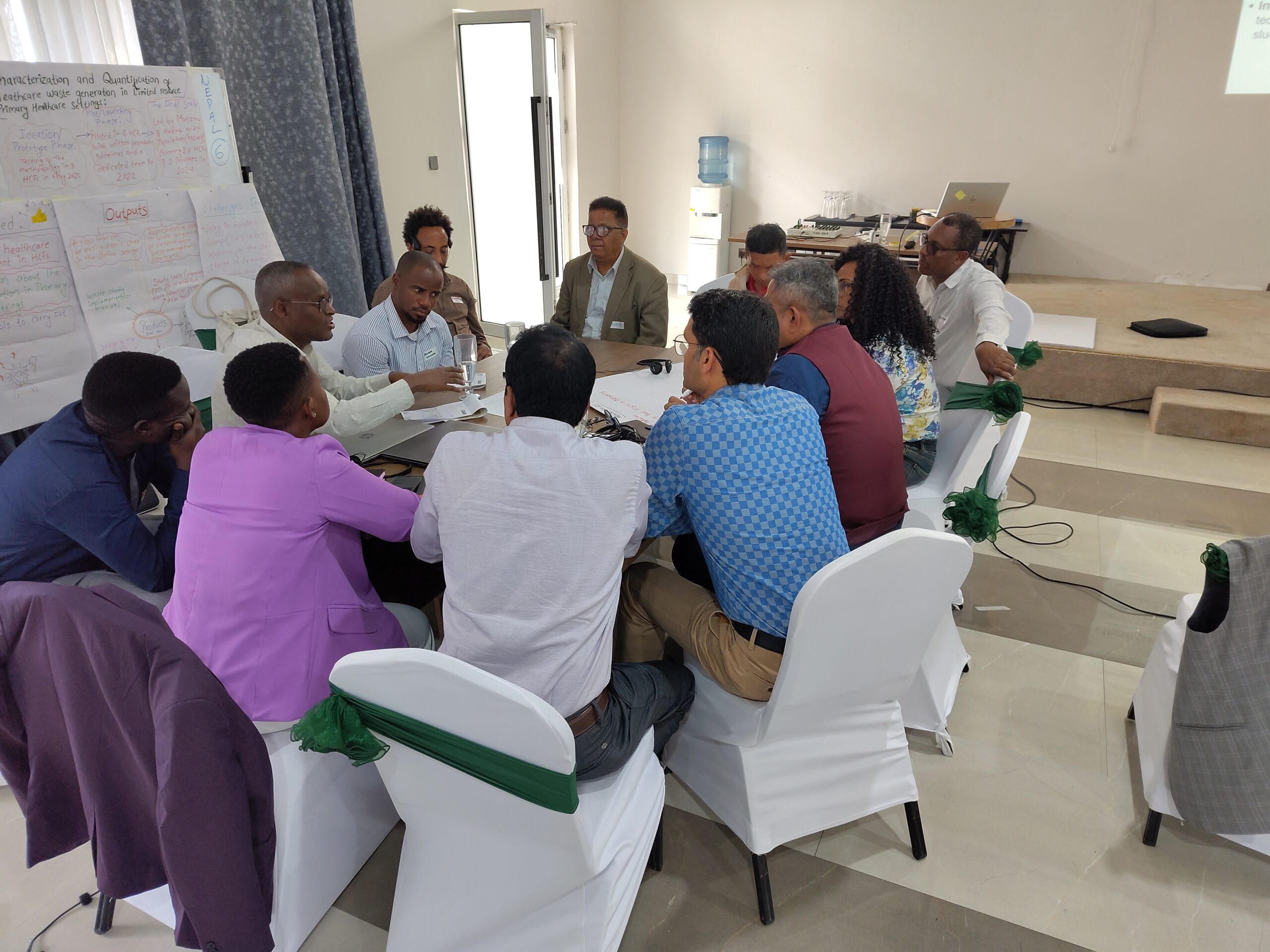
The SWSC’s collective experience, as highlighted during the recent Interregional Workshop in Kenya, points to several practical secrets for sustaining WASH advocacy when situations are fluid.
First, work with multiple advocacy targets simultaneously. In many SWSC countries, senior ministry officials may lose their positions quickly, forcing advocacy teams to pivot on the fly. If an advocacy strategy depends on a single minister or district officer, it is fragile by design. Teams must engage both elected political leaders and professional civil service leaders — the career technical experts who often remain when political appointees rotate. In Nepal, the advocacy project team mitigates the risk of turnover by working not with one person in government but with entire teams, including potential successors to current officials. Formal documentation of meetings, policies and agreements also ensures continuity when leadership changes.
Second, build trust before you need it. As discussed in Kenya, moving from an elevator pitch to sharing tea, coffee, or even a meal with advocacy targets deepens relationships and creates space for real conversation. One cannot surge trust; it requires a longterm investment. Trusted, long-term relationships make advocacy successes more likely and make it easier to secure written commitments after verbal ones. In Mali, and elsewhere, laws take time to change and budget commitments are hard to secure within a finite project cycle, so advocacy over the long-term is not optional.
Third, build coalitions. Working with UNICEF, WHO and other organisations who share the same advocacy goals helps ensure efforts are sustained even when one organisation faces constraints. In Cambodia, consistent advocacy collaboration with GIZ and UNICEF led to actual changes in national guidelines for WASH in schools. Perhaps more importantly, ongoing partnerships with local civil society ensure advocacy continues beyond any single SWSC project phase.
Fourth, celebrate and document successes. When an advocacy win happens — however small — it should be documented, shared, and celebrated. This builds evidence, motivates teams in difficult conditions, and strengthens the case for continued advocacy investment.
Rolling with the Punches
Many SWSC countries will remain in fragile situations for the near- medium-term. Governments will change, conflicts will flare, and personnel will rotate. SWSC advocacy teams and their local system actors must learn to roll with the punches — adapting strategies, diversifying targets, documenting progress, and nurturing the relationships that make change possible. Stepping back from advocacy until conditions improve is not an option when healthcare facilities lack clean water, schools lack safe sanitation, and communities drink water that makes them ill. The evidence from the SWSC’s twelve countries is clear: sustained, flexible, relationship-based advocacy works, even in the most difficult settings.
Author: John Oldfield, SWSC Advocacy Advisor